
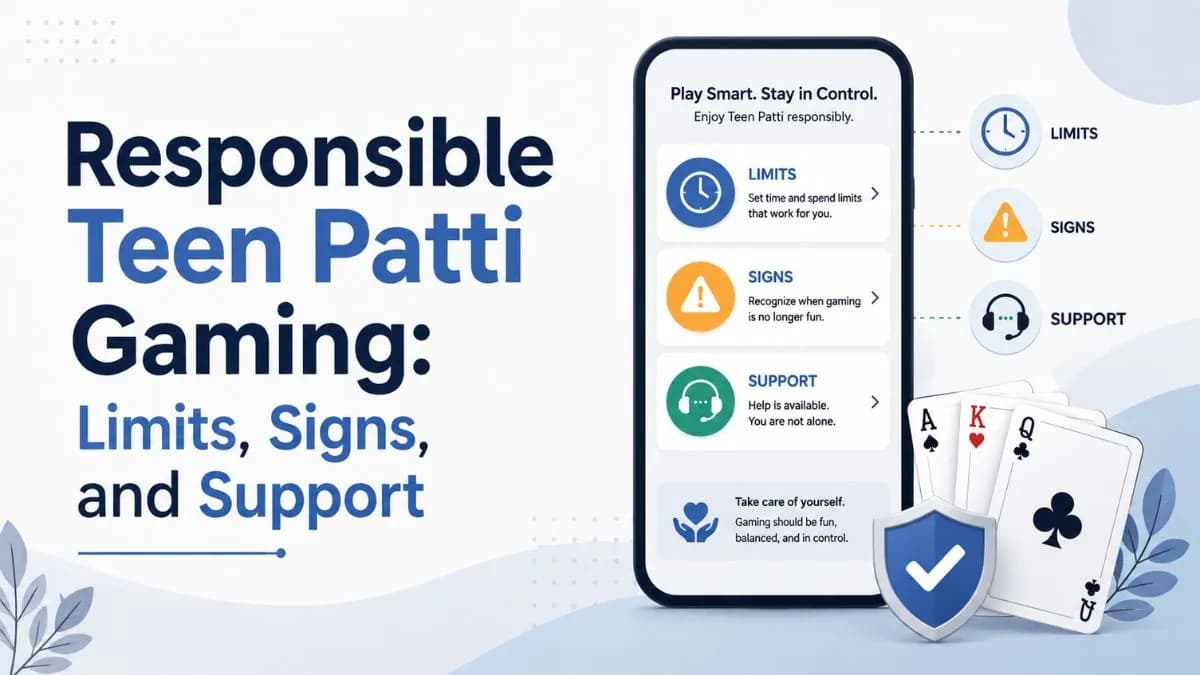
Responsible Gaming
Responsible Teen Patti Gaming: Limits, Signs, and Support
Practical habits for keeping Teen Patti recreational: setting limits before playing, recognising warning signs early, and knowing where support exists.
Updated 17 July 2026
Legal and Industry Updates
Published 17 July 2026 · Updated 17 July 2026
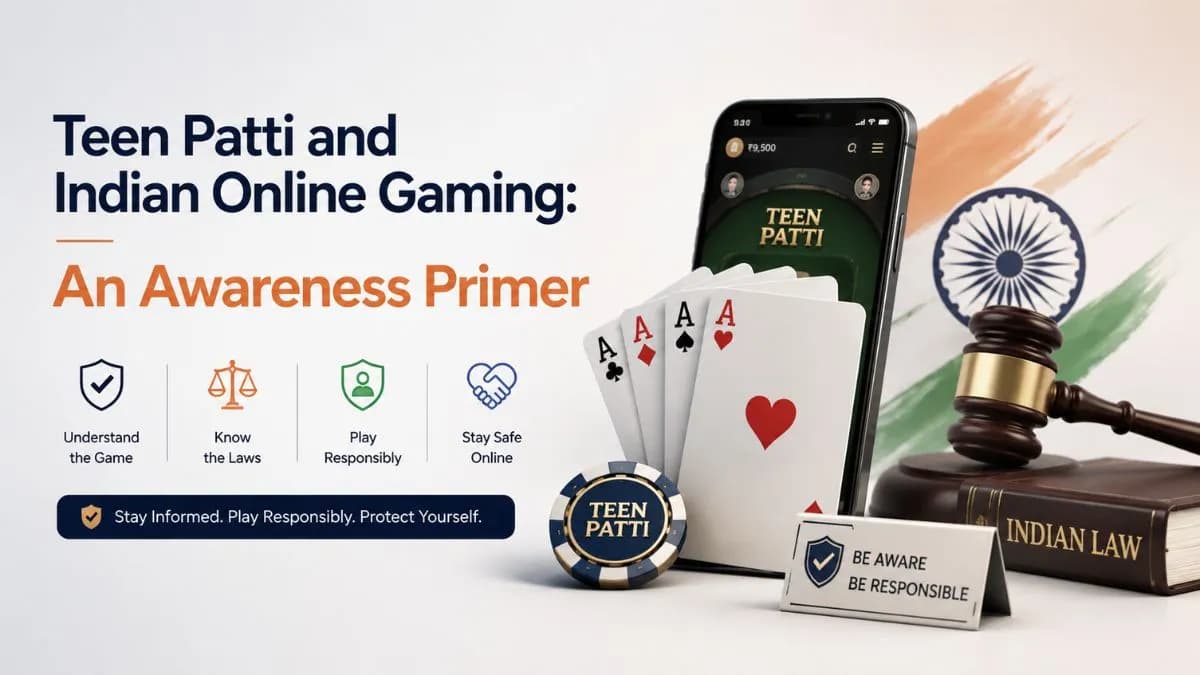
Teen Patti sits at an awkward junction: a traditional festival game, now delivered through real-money apps, in a country where gambling law is decided state by state and much of it was written long before smartphones existed. This post is an orientation for players, not legal analysis — it maps the shape of the topic and the questions worth asking, and deliberately stops short of conclusions that depend on where you live and when you read this.
In India, gambling regulation is largely a state subject, and the states have gone very different ways. Some prohibit real-money games broadly, some restrict specific formats, some have moved toward licensing and regulating online play, and several have changed position more than once in recent years. Layered on top, national-level rules for online gaming have been developing too, and court challenges keep parts of the picture in motion.
The practical consequence is that no general statement about Teen Patti's legal status in India survives contact with the map. The only question with a usable answer is specific: what is the current position in the state where you are — and 'current' is doing real work in that sentence, because summaries more than a year old are routinely out of date.
A long-running thread in Indian jurisprudence separates games of skill from games of chance, with different legal treatment flowing from the classification. Courts have treated some formats — rummy, and certain poker formats — as skill-predominant in some rulings, while Teen Patti's shorter decision structure has generally not received the same treatment; the position varies by state and continues to evolve.
Two boundaries matter more to a player than the doctrine itself. First, the skill-versus-chance question mainly concerns real-money play — free-to-play apps using virtual chips with no cash-out sit in a different category. Second, classification is not something an app decides about itself: a marketing page declaring a game '100% legal' or 'skill-based' is a claim, not a ruling.
None of this requires a player to become a legal scholar. It requires a few habits:
Suppose real-money play is permitted where you live. That settles one question and none of the others: legality says nothing about whether a particular operator identifies itself, pays withdrawals, secures your data, or writes honest bonus terms. The gap between 'permitted' and 'trustworthy' is where most player harm actually happens, and it is covered by a different kind of checking — our platform review guide walks through it step by step.
The same applies to the personal dimension: a legal table can still take more time and money than intended. Our responsible gaming guide covers limits, warning signs, and where support exists.
Our position is the modest one: we describe, we do not advise. Our legalities page holds a high-level overview of the framework, every game page carries the same reminder, and none of it substitutes for checking the current rules where you live. In a landscape this uneven and this mobile, the habit of verifying beats any snapshot of the law — including this one.
This article is informational only and is not legal or financial advice. This website is an independent directory: it does not operate games, take bets, or process payments. See our editorial policy for how content is researched and updated.
Responsible Gaming
Practical habits for keeping Teen Patti recreational: setting limits before playing, recognising warning signs early, and knowing where support exists.
Updated 17 July 2026
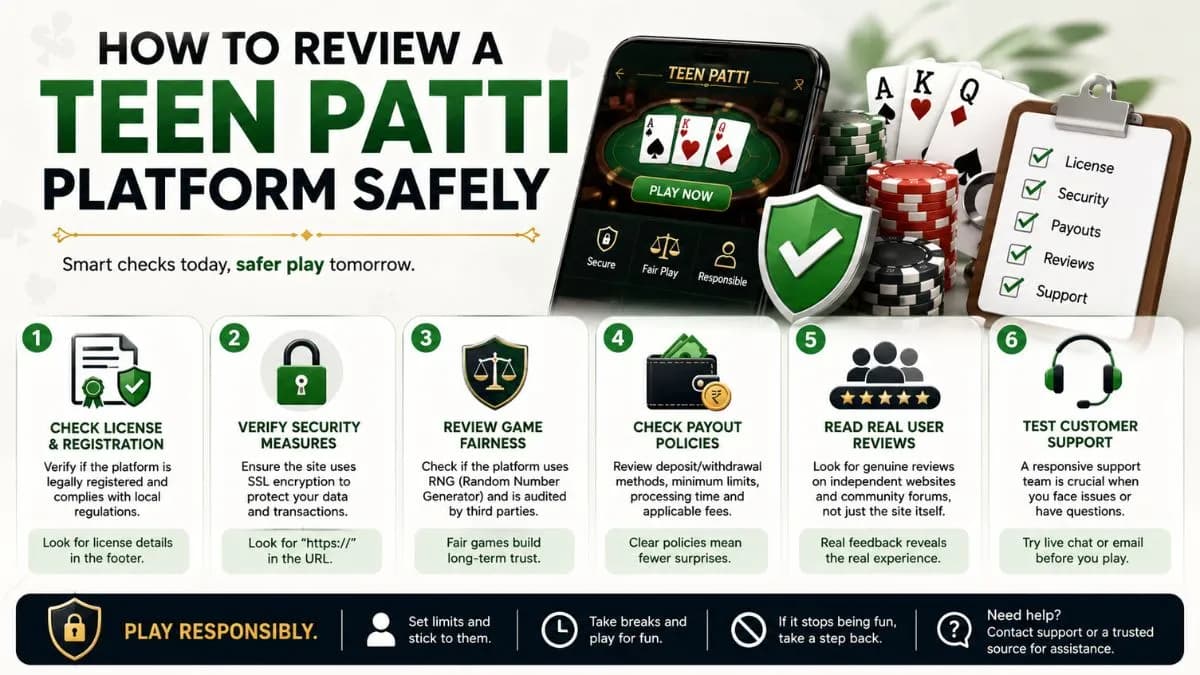
Platform Guides
A practical checklist for evaluating any Teen Patti app before installing: operator identity, terms, permissions, payment handling, and red flags.
Updated 17 July 2026