

Legal and Industry Updates
Is Teen Patti a Game of Skill or Chance in India?
Is Teen Patti skill or chance under Indian law? A plain-language look at how courts and states treat card games. Not legal advice.
Updated 14 October 2026
Teen Patti Basics
Published 29 October 2026 · Updated 29 October 2026
"Guaranteed Teen Patti tricks" that promise to beat the deal are false — the cards you're dealt are random, and no technique changes that. But genuine skill elements do exist in how you play the hand you're dealt: reading opponents' behavior, timing your bets, and managing your bankroll across a session.
Any claim promising to influence the deal itself — "tap the screen three times before dealing," "play at a certain time of day," "use this special code to get better cards" — doesn't correspond to how these systems actually work and should be treated as false.
Reading betting patterns. How other players bet (quickly, hesitantly, aggressively, passively) can give you real information, especially over multiple hands with the same opponents.
Bet timing and sizing. When to call, raise, or fold based on the information available to you — including your own hand strength relative to the betting so far — is a real decision with real consequences, closer to poker-style skill than to chance.
Bankroll management. Deciding how much to risk per session, when to stop, and how to size bets relative to your total bankroll is a skill independent of any single hand's outcome, and arguably the most important one for avoiding losses that outpace your means.
Reading the sideshow/blind-seen dynamic. Understanding when a blind bet signals strength or bluff, and how sideshow requests change the information available, is a learnable skill.
Confirmation bias plays a large role — a player who tries a "trick" and wins attributes the win to the trick, ignoring the much larger number of times it didn't work or wasn't tested against a control. Marketing pages selling "guaranteed trick" guides or courses profit regardless of whether the advice works, which is itself a reason for skepticism.
Focus on the parts of the game you can actually influence — bet sizing, reading opponents, bankroll discipline — and treat any claim about influencing the deal itself as false. 18+ only; gambling involves financial risk regardless of skill level.
This article is informational only and is not legal or financial advice. This website is an independent directory: it does not operate games, take bets, or process payments. See our editorial policy for how content is researched and updated.
Legal and Industry Updates
Is Teen Patti skill or chance under Indian law? A plain-language look at how courts and states treat card games. Not legal advice.
Updated 14 October 2026

Rules and Hand Rankings
See the exact odds of every Teen Patti hand from 22,100 possible combinations: trail, pure sequence, sequence, colour, pair and high card.
Updated 10 October 2026
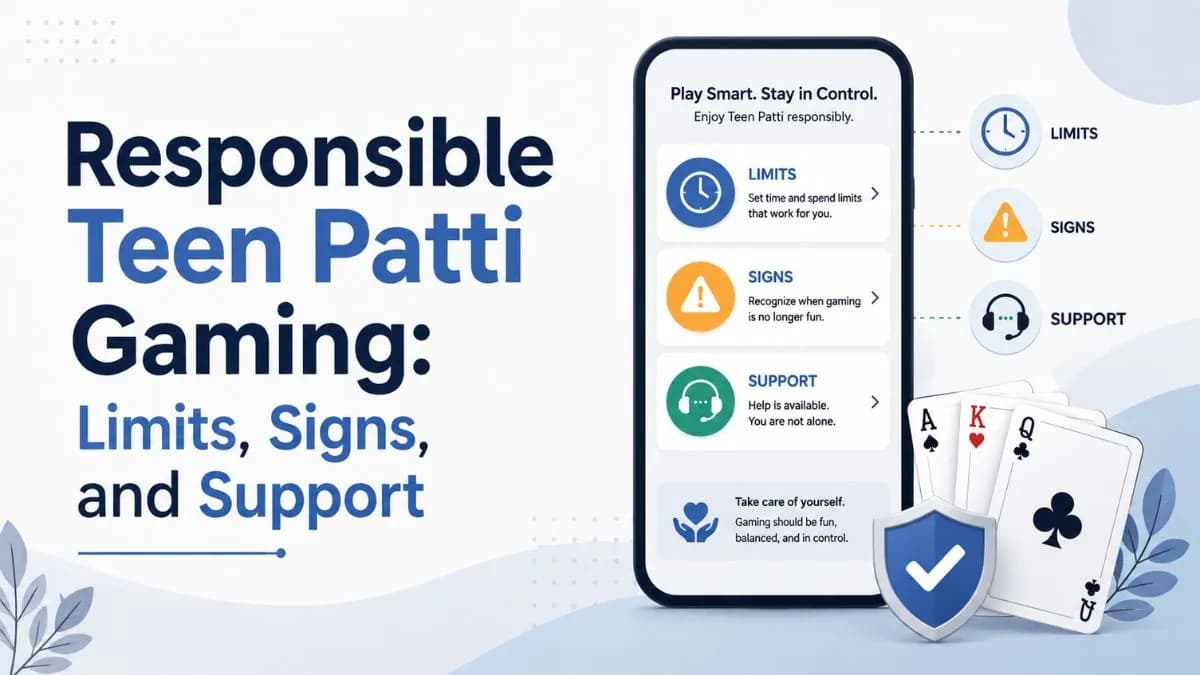
Responsible Gaming
Practical habits for keeping Teen Patti recreational: setting limits before playing, recognising warning signs early, and knowing where support exists.
Updated 17 July 2026