
Rules and Hand Rankings
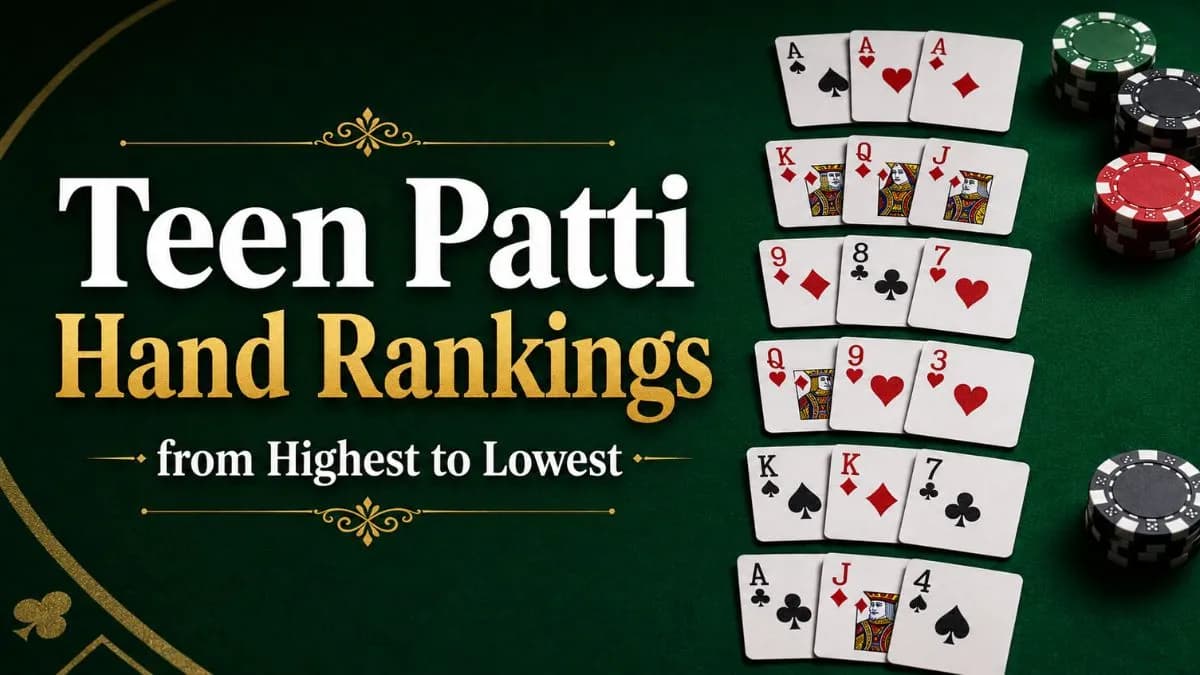
Teen Patti Hand Rankings from Highest to Lowest
All six Teen Patti hand ranks explained with examples: trail, pure sequence, sequence, colour, pair, and high card — and how ties break.
Updated 17 July 2026
Rules and Hand Rankings
Published 10 October 2026 · Updated 10 October 2026

Quick answer: A standard 52-card deck can form 22,100 different three-card hands. A trail is 52 of them (about 0.24%), a pure sequence 48 (0.22%), a sequence 720 (3.26%), a colour 1,096 (4.96%), a pair 3,744 (16.94%) and a high card 16,440 (74.39%).
Knowing the odds does not make you win, but it explains why the hands rank the way they do and helps set realistic expectations.
Three cards from 52 can be chosen in C(52,3) = 52 × 51 × 50 ÷ 6 = 22,100 ways. Every probability below is a count of hands divided by 22,100.
| Hand | Combinations | Probability | Roughly 1 in… |
|---|---|---|---|
| Trail | 52 | 0.235% | 425 |
| Pure sequence | 48 | 0.217% | 460 |
| Sequence | 720 | 3.258% | 31 |
| Colour | 1,096 | 4.959% | 20 |
| Pair | 3,744 | 16.941% | 6 |
| High card | 16,440 | 74.389% | 1.3 |
| Total | 22,100 | 100% |
| Hand is at least… | Hands | Probability | Roughly 1 in… |
|---|---|---|---|
| Trail | 52 | 0.24% | 425 |
| Pure sequence or better | 100 | 0.45% | 221 |
| Sequence or better | 820 | 3.71% | 27 |
| Colour or better | 1,916 | 8.67% | 12 |
| Pair or better | 5,660 | 25.61% | 4 |
| Any hand | 22,100 | 100% | 1 |
Imagine you are dealt Q♣ 9♦ 4♠. That is a high-card hand, the most common type. Now imagine J♥ J♦ 6♣, a pair, which about 17% of hands are. Neither tells you whether you will win, because the other players hold hands drawn from the same deck at the same time.
A common trap is believing a rare hand is "due". Because each deal is independent, the chance of a trail on the next hand is always 52 in 22,100, however long you have waited. This is a major reason limits and stop points matter. See responsible Teen Patti gaming.
Nothing in these numbers can make a win certain. Treat Teen Patti as entertainment and set a spending limit before you play. For how the hands rank, see hand rankings, and for whether the game is mostly skill or chance, read Is Teen Patti skill or chance?
18+ only. Educational content; no outcome is promised.
This article is informational only and is not legal or financial advice. This website is an independent directory: it does not operate games, take bets, or process payments. See our editorial policy for how content is researched and updated.
Rules and Hand Rankings
All six Teen Patti hand ranks explained with examples: trail, pure sequence, sequence, colour, pair, and high card — and how ties break.
Updated 17 July 2026

Rules and Hand Rankings
Trail (three of a kind) beats a pure sequence in Teen Patti. See the full ranking, why it happens and the exact odds of each hand.
Updated 4 October 2026
Responsible Gaming
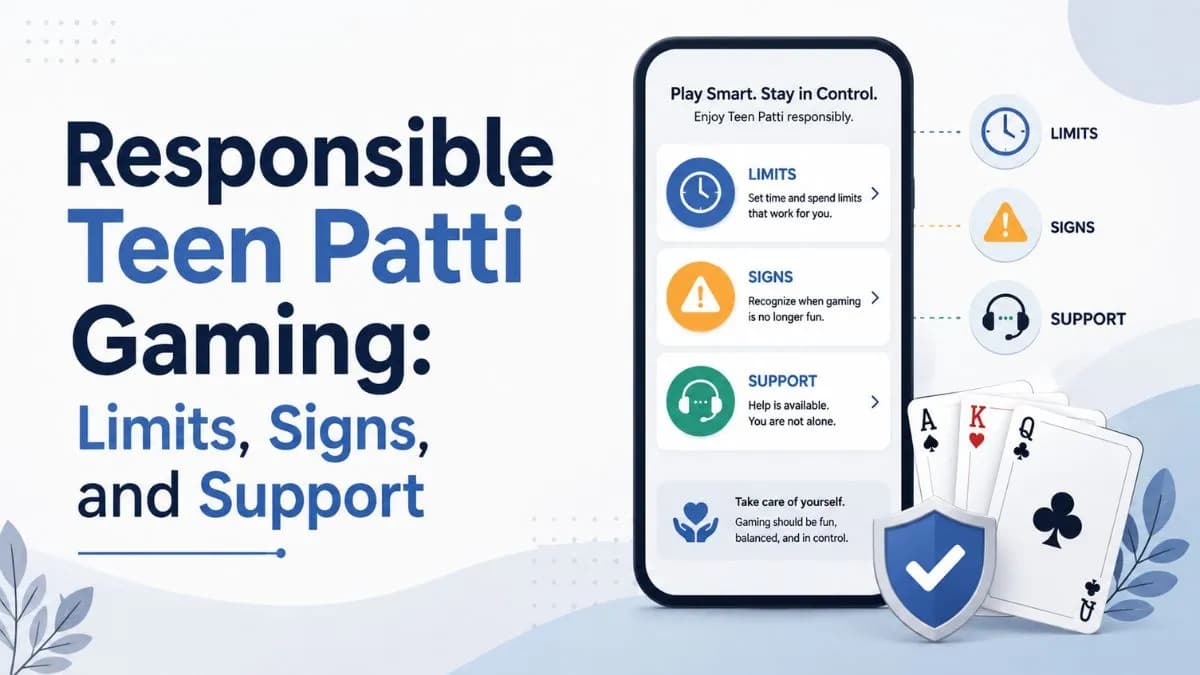
Practical habits for keeping Teen Patti recreational: setting limits before playing, recognising warning signs early, and knowing where support exists.
Updated 17 July 2026