Quick answer: Best of Four deals each player four cards instead of the usual three. You then choose the strongest three-card combination from those four to form your hand, using the same rankings as standard Teen Patti. Betting, blind and seen play, and showdown rules stay exactly the same — only the number of cards dealt and the selection step change.
The name describes the mechanic directly: you're picking the "best of four" possible three-card hands hidden inside your draw.
How the extra card changes your hand
With four cards instead of three, there are four different three-card combinations available — drop any one of the four and the remaining three form a hand. You (or the app, automatically) pick whichever of those four combinations ranks highest.
- A♣ K♦ 9♠ 9♥: dropping the ace or king leaves a pair of nines — the strongest of the four possible combinations.
- 7♣ 8♦ 9♠ 2♥: dropping the 2 leaves a pure sequence, 7-8-9 — clearly the best option here.
- K♣ K♦ 5♠ 5♥: dropping either 5 leaves a pair of kings, which beats the pair of fives you'd get by dropping a king instead.
What changes in play
Because you're selecting the best of four combinations rather than being dealt one fixed hand, average hand strength rises across the table.
| Effect | Result |
|---|
| Pairs | Much more common |
| Plain high-card hands | Rarer, and usually too weak to open |
| Trails and pure sequences | Slightly more common, since more combinations get checked |
| Strategy | Betting and packing thresholds need to shift up accordingly |
Reading a Best of Four showdown
Because you always keep the best three of your four cards, a weak-looking deal often hides a decent hand.
| Four cards dealt | Best three-card hand |
|---|
| A♣ K♦ 9♠ 9♥ | Pair of 9s (drop A or K) |
| 7♣ 8♦ 9♠ 2♥ | Pure sequence 7-8-9 (drop 2) |
| 5♣ J♦ Q♠ 2♥ | High card, Q-high (drop 2) |
| K♣ K♦ 5♠ 5♥ | Pair of Kings (drop a 5) |
Betting, blind and seen, sideshows
None of this changes. Boot, blind and seen bets, packing, and sideshows all work exactly as in standard Teen Patti — the only difference is the deal size and the selection step before betting starts. See blind vs seen for the betting basics.
Tie-breaks
Once each player's best three-card hand is set, ties resolve exactly as they do in standard Teen Patti — by comparing hand type, then rank, then suit order where a table uses one. Best of Four doesn't introduce any new tie-break rule of its own.
Common beginner mistakes in Best of Four
- Not checking all four possible three-card combinations before deciding your hand — the best one isn't always the obvious first glance.
- Treating a pair as automatically strong. Pairs are common here, so the betting threshold that worked in standard Teen Patti is often too loose.
- Sizing bets as if hands run as weak as in the standard game, when average strength is higher.
- Forgetting the dropped fourth card has no further use once your best three are chosen — it doesn't come back into play.
Is Best of Four the same everywhere?
The core mechanic — four cards dealt, best three kept — is consistent wherever the name is used. Table-specific details like tie-break conventions follow the same rules as standard Teen Patti. Treat the description above as the common core and the table's own rules screen as the final word.
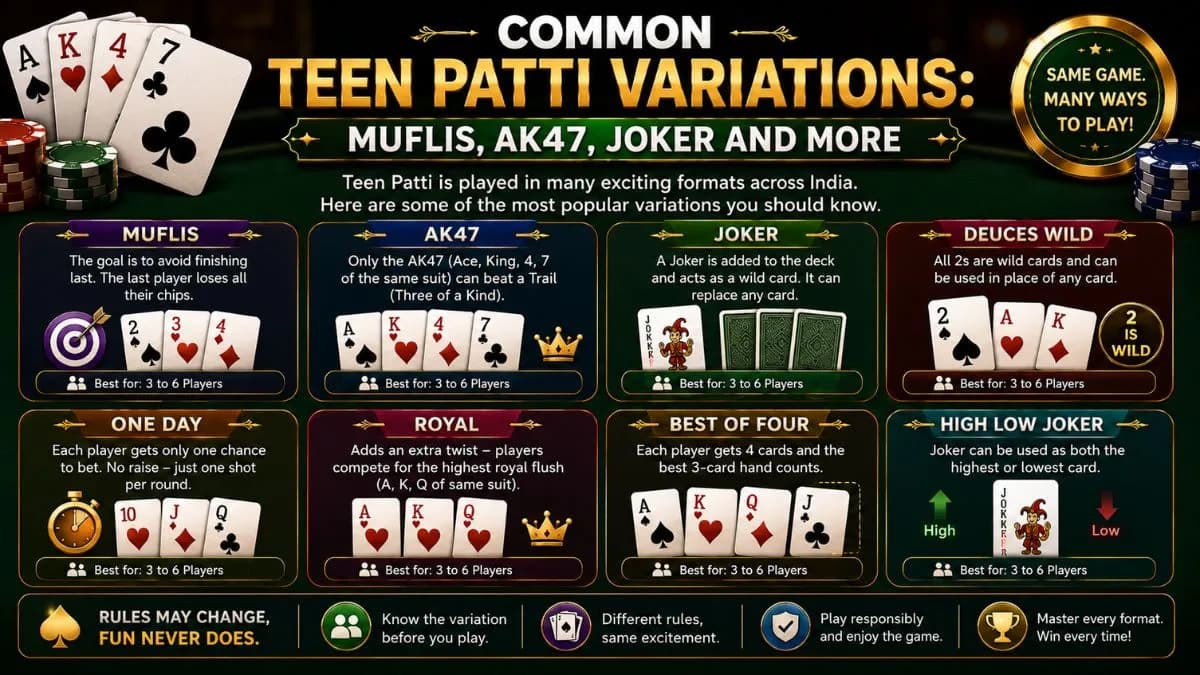
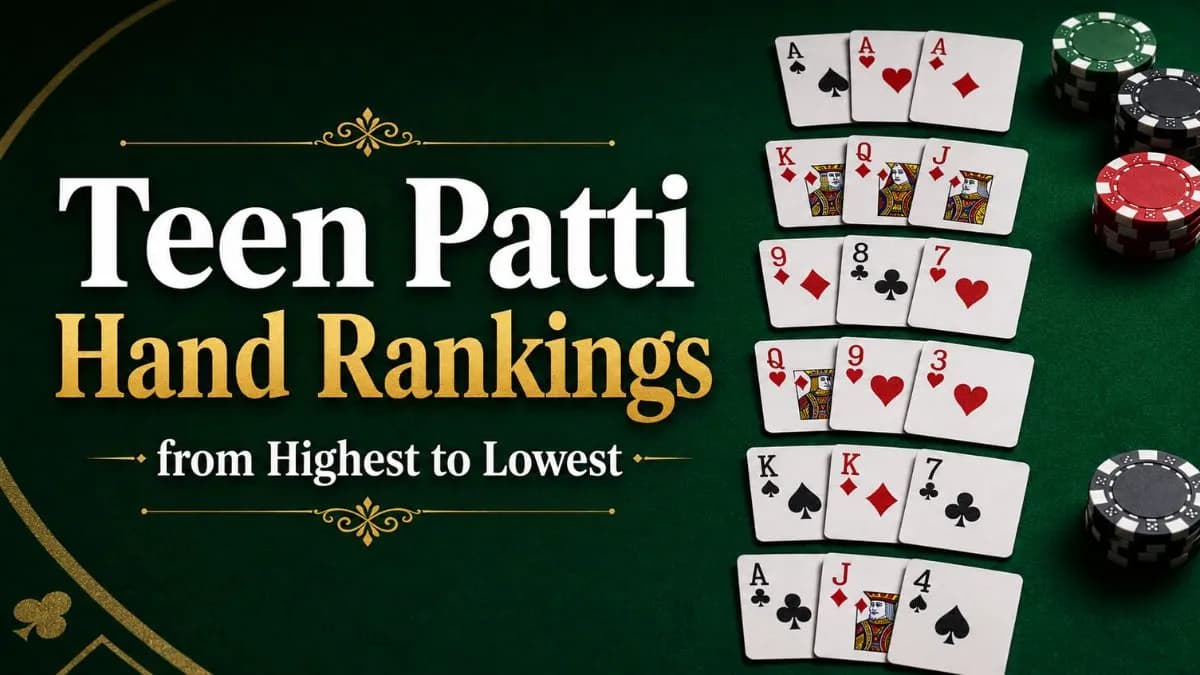
Compare Best of Four with other styles in common Teen Patti variations, including AK47 and Muflis. The ranking order stays standard — see trail vs pure sequence.
18+ only. Educational content.
This article is informational only and is not legal or financial advice. This website is an independent directory: it does not operate games, take bets, or process payments. See our editorial policy for how content is researched and updated.